
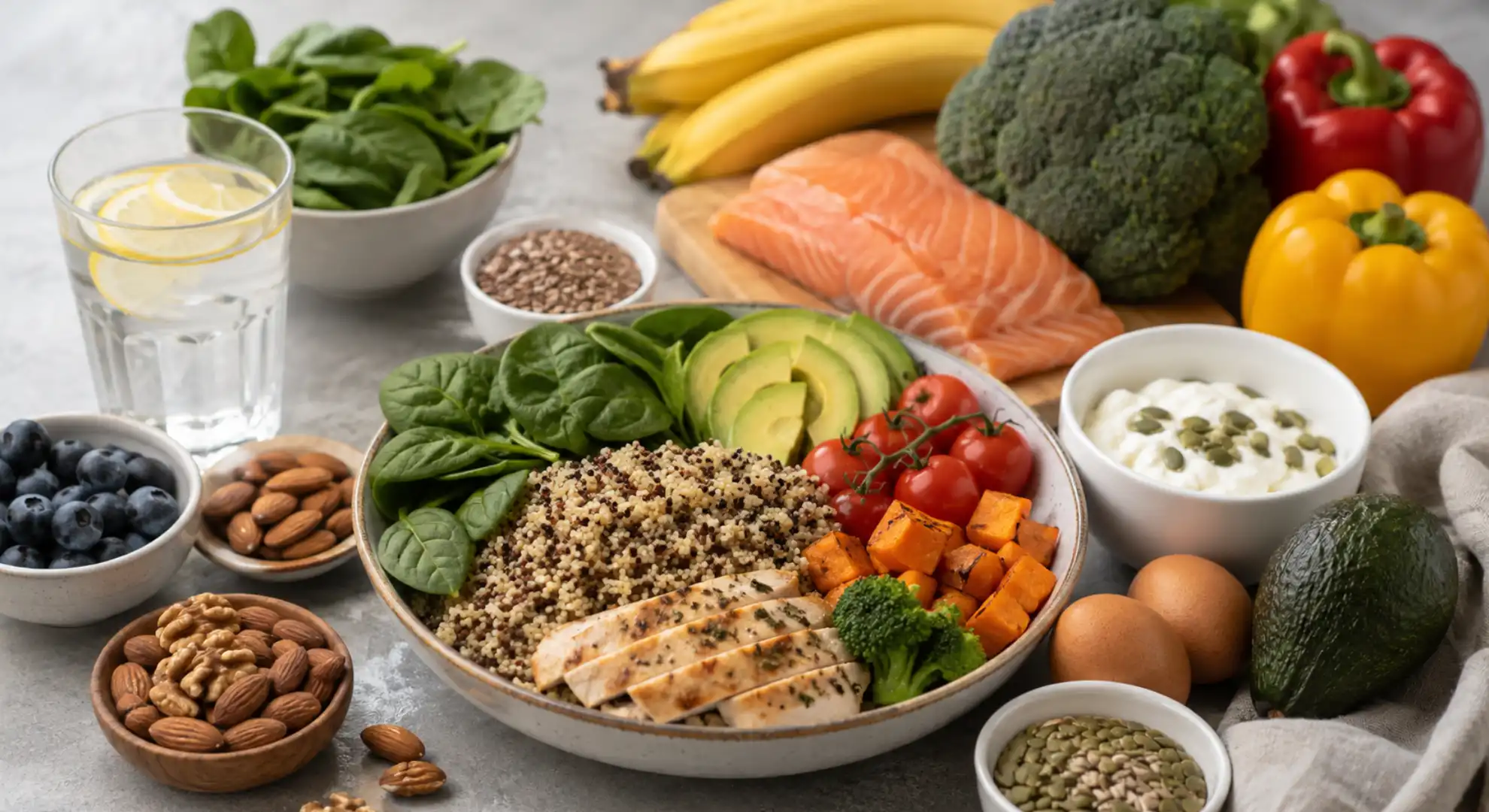
Recovering from an injury is not only about rest, treatment and rehabilitation. Nutrition also plays an important supporting role in the healing process.
Whether you are recovering from a sports injury, muscle strain, ligament problem, fracture, surgery or a period of reduced activity, your body needs sufficient energy, protein, vitamins, minerals and fluids to repair tissue and maintain strength.
There is no single food or supplement that can make an injury heal overnight. However, a balanced diet alongside an appropriate physiotherapy and rehabilitation programme can give your body the nutritional support it needs to recover effectively.
What should you eat when recovering from an injury?
The short answer: focus on regular balanced meals containing a good source of protein, starchy carbohydrates, fruit and vegetables, healthy fats and enough fluids.
A practical recovery diet should include:
- Protein at each main meal
- Plenty of fruit and vegetables
- Wholegrain or higher-fibre carbohydrates
- Healthy unsaturated fats
- Calcium- and vitamin D-rich foods
- Regular fluids throughout the day
- Enough overall food to meet your body’s recovery needs
The NHS Eatwell Guide recommends eating a varied diet across the major food groups rather than relying on individual “superfoods”.
Why does nutrition matter during injury recovery?
When tissue is injured, your body begins a complex repair process. At the same time, pain or reduced mobility may mean you are exercising less than usual.
Periods of inactivity or immobilisation can contribute to a loss of muscle mass and strength. Research into rehabilitation nutrition therefore emphasises the importance of avoiding inadequate energy and protein intake during recovery.
Good nutrition can help provide the building blocks your body needs for:
- Tissue repair
- Maintaining muscle mass
- Supporting bone health
- Normal immune function
- Energy for rehabilitation exercises
- Returning gradually to everyday activity or sport
Nutrition should work alongside, rather than replace, appropriate medical care and physiotherapy.
1. Make protein a priority
Protein is one of the most important nutrients during injury recovery because it is needed to build, maintain and repair body tissues.
If an injury significantly reduces your activity, maintaining your protein intake may also help support muscle while you work towards returning to normal movement.
NHS guidance highlights protein’s role in maintaining muscle and repairing wounds and broken bones.
Good sources of protein include:
Chicken and turkey
Fish
Eggs
Milk, yoghurt and cheese
Beans
Lentils
Chickpeas
Tofu and tempeh
Soya products
Nuts and seeds
Rather than consuming most of your protein in one meal, try including a protein source across your meals throughout the day.
For example:
Breakfast: Greek yoghurt with fruit and oats
Lunch: Chicken, tofu or bean-based salad
Snack: Yoghurt, milk, nuts or hummus
Dinner: Fish, lean meat, lentils or beans with vegetables and carbohydrates
Higher protein requirements may sometimes be appropriate following significant injury, surgery or periods of immobilisation, particularly for active people. However, individual requirements vary, and people with kidney, liver or other medical conditions should seek personalised professional advice before substantially increasing protein intake.
2. Don’t cut carbohydrates unnecessarily
When activity levels fall, some people immediately remove bread, rice, potatoes or pasta because they are worried about gaining weight.
That is not usually necessary.
Carbohydrates are an important source of energy. Your body still requires energy for everyday functions, healing and rehabilitation even if you are temporarily exercising less.
The NHS recommends basing meals around higher-fibre starchy carbohydrates such as potatoes, bread, rice and pasta as part of a balanced diet.
Good choices include:
- Potatoes and sweet potatoes
- Oats
- Wholegrain bread
- Brown or wholegrain rice
- Wholewheat pasta
- Quinoa
- Wholegrain cereals
- Beans and pulses
Your portion sizes may change when your activity levels change, but drastically restricting food can make it harder to obtain enough protein, vitamins, minerals and overall energy.
3. Eat enough — even when you are less active
It is normal for energy requirements to change when an injury temporarily reduces your physical activity.
However, less activity does not mean your body no longer needs energy.
Healing itself requires resources, and an excessive calorie deficit can make it harder to maintain muscle and meet your nutritional requirements. Rehabilitation research consistently highlights adequate energy intake as an important consideration during periods of injury and immobilisation.
Instead of dramatically reducing how much you eat, focus on the quality of your diet:
- Choose nutrient-rich foods
- Prioritise protein
- Eat plenty of vegetables and fruit
- Adjust portions gradually to your activity level
- Limit foods that provide lots of calories but few useful nutrients
Your energy needs will continue to change as your rehabilitation progresses and your activity increases.
4. Include plenty of colourful fruit and vegetables
Fruit and vegetables provide a wide range of vitamins, minerals, antioxidants and fibre.
The NHS recommends eating at least five portions of a variety of fruit and vegetables each day.
Try to include different colours across the week:
- Berries
- Oranges
- Kiwi fruit
- Apples
- Peppers
- Tomatoes
- Carrots
- Broccoli
- Leafy green vegetables
- Peas
- Beans
You do not need expensive powders, juices or so-called superfoods. Fresh, frozen and tinned fruit and vegetables can all form part of a healthy diet.
What about vitamin C?
Vitamin C is one of several nutrients involved in normal tissue health and repair.
Foods naturally rich in vitamin C include:
- Oranges
- Kiwi fruit
- Berries
- Peppers
- Broccoli
- Tomatoes
Aim to obtain nutrients through a varied diet rather than automatically reaching for high-dose supplements.
5. Remember calcium and vitamin D for bone health
Nutrition is particularly important if your injury involves a bone or if you have experienced a fracture.
Calcium helps maintain healthy bones, while vitamin D helps the body absorb calcium. NHS guidance states that adults generally require around 700 mg of calcium per day and 10 micrograms of vitamin D per day.
Calcium-rich foods include:
- Milk
- Yoghurt
- Cheese
- Calcium-fort
- fied plant drinks
- Tofu
- Soya beans
- Some green vegetables
- Sardines where the bones are eaten
During autumn and winter, NHS guidance recommends that adults should consider a daily supplement containing 10 micrograms of vitamin D because it can be difficult to obtain enough from sunlight and food alone.
People at greater risk of vitamin D deficiency may receive different advice from their GP or healthcare professional.
6. Choose healthy fats
Fat is an essential part of a balanced diet.
Where possible, choose foods containing predominantly unsaturated fats, including:
- Olive oil
- Rapeseed oil
- Avocado
- Nuts
- Seeds
- Oily fish
The NHS recommends at least two portions of fish per week, including one portion of oily fish such as salmon, sardines, trout or mackerel.
Oily fish contains omega-3 fatty acids, but that does not mean large doses of omega-3 supplements are necessary for every injury.
Research into specific supplements during musculoskeletal rehabilitation is still developing, and evidence for many products marketed for injury recovery remains limited.
A food-first approach is usually the best starting point.
7. Stay well hydrated
Hydration can easily be overlooked when you are less active than usual.
Your body still needs fluid for normal circulation, digestion, temperature regulation and everyday physiological processes.
As a general guide, the NHS recommends around 6 to 8 cups or glasses of fluid per day, although your requirements may be higher if you are active, recovering from illness or in hot weather.
Water is an excellent choice, but fluids can also come from:
- Milk
- Tea
- Coffee
- Sugar-free drinks
- Soups
- High-water foods such as fruit and vegetables
A simple hydration check is the colour of your urine. For most people, a pale yellow colour generally suggests good hydration.
If you have been advised to restrict your fluid intake because of a medical condition, follow your healthcare team’s advice instead.
8. What should a recovery meal look like?
You do not need to calculate every nutrient.
A simple approach is to build your meals around four components:
- Component Examples
- Protein Chicken, fish, eggs, yoghurt, beans, lentils, tofu
- Carbohydrate Potatoes, rice, pasta, oats, wholegrain bread
- Vegetables or fruit Broccoli, peppers, leafy greens, berries, oranges
- Healthy fats Olive oil, avocado, nuts, seeds
For example:
Breakfast
Porridge made with milk, topped with Greek yoghurt, berries and a small handful of nuts.
Lunch
Wholegrain wrap with chicken or hummus, mixed salad and a piece of fruit.
Snack
Yoghurt with fruit, or wholegrain toast with peanut butter.
Dinner
Salmon, potatoes and mixed vegetables with olive oil.
Vegetarian alternative
Lentil or chickpea curry with brown rice, vegetables and yoghurt or a fortified dairy alternative.
The aim is consistency, not perfection.
9. What should you eat around physiotherapy sessions?
As rehabilitation progresses, physiotherapy exercises may become increasingly demanding.
Eating appropriately can help ensure you have enough energy to complete your programme effectively.
Before your rehabilitation session
If you are hungry, consider a light meal or snack containing carbohydrates and some protein, such as:
- Banana and yoghurt
- Toast with eggs
- Oats with milk
- Fruit and Greek yoghurt
- After your rehabilitation session
A normal balanced meal containing protein and carbohydrates is often sufficient.
Examples include:
- Chicken with rice and vegetables
- Eggs on wholegrain toast
- Yoghurt, oats and fruit
- Lentils with potatoes or rice
- Fish with potatoes and vegetables
Protein supplements are convenient for some people, but they are not essential if your diet already provides enough protein.
10. Should you follow an “anti-inflammatory diet”?
Inflammation often gets presented as something that must be eliminated during injury recovery.
In reality, inflammation is part of the body’s normal healing response. Trying to suppress it aggressively through extreme diets or large amounts of supplements is not necessarily helpful. Sports nutrition research cautions that the inflammatory response has an important role in tissue healing.
A more sensible approach is to eat an overall balanced diet containing:
- Fruit
- Vegetables
- Wholegrains
- Fish
- Nuts
- Seeds
- Pulses
- Healthy oils
Rather than searching for one “anti-inflammatory” food, focus on your overall eating pattern.
11. Do you need supplements for injury recovery?
For most people, supplements should not be the first place to start.
A well-balanced diet can provide the majority of the nutrients needed for general health and recovery.
Supplements may be appropriate where there is:
- A diagnosed nutrient deficiency
- Limited food intake
- A medically restricted diet
- Poor appetite
- Increased nutritional requirements
- Advice from a GP or registered dietitian
Vitamin D is an important exception to be aware of because NHS guidance recommends considering a 10 microgram daily supplement during autumn and winter.
Be cautious with products claiming to “speed up healing”, “repair tendons instantly” or dramatically shorten recovery time. Evidence for many injury-specific supplements remains uncertain.
Common nutrition mistakes during injury recovery
Eating too little
A sudden drop in food intake can mean you also reduce your protein, vitamin and mineral intake.
Stopping carbohydrates
Carbohydrates continue to provide useful energy for daily life and rehabilitation.
Relying heavily on supplements
Supplements cannot compensate for a consistently poor diet.
Eating all your protein at dinner
Including protein in several meals across the day is a more practical strategy.
Ignoring hydration
You still need to drink regularly even if you are temporarily exercising less.
Expecting food to replace rehabilitation
Nutrition supports healing, but it cannot replace appropriate assessment, gradual loading, exercise and rehabilitation.
Nutrition and physiotherapy work best together
Recovery from a musculoskeletal injury is rarely about one single intervention.
Your rehabilitation may involve restoring movement, gradually rebuilding strength, improving balance, increasing tolerance to activity and returning safely to work, exercise or sport.
Good nutrition provides the background support for those processes.
At Amesbury Physiotherapy, we focus on understanding the individual, the injury and the activities you want to return to. Your physiotherapy programme can then be progressed appropriately as your symptoms, strength and confidence improve.
If pain or injury is preventing you from moving normally, an assessment can help establish what may be contributing to your symptoms and identify appropriate next steps.
Frequently Asked Questions About Nutrition for Injury Recovery
What are the best foods for injury recovery?
There is no single best food. Focus on balanced meals containing protein, wholegrain or starchy carbohydrates, fruit and vegetables, healthy fats and sufficient fluids. Foods such as eggs, fish, yoghurt, beans, lentils, wholegrains, vegetables, fruit, nuts and seeds can all contribute useful nutrients.
Is protein important for injury recovery?
Yes. Protein provides amino acids used to maintain and repair body tissues and is particularly important for helping maintain muscle during periods of reduced activity. Include a source of protein with your main meals and, where appropriate, snacks.
Should I eat less because I am injured and exercising less?
Your energy requirements may decrease, but extreme calorie restriction is generally not a good recovery strategy. Your body still needs energy and nutrients for healing, normal bodily functions and rehabilitation.
Should I stop eating carbohydrates while injured?
No. Carbohydrates provide energy and can remain part of a balanced recovery diet. Adjusting portion sizes may be appropriate if your activity level changes, but completely removing carbohydrates is usually unnecessary.
What vitamins help injury recovery?
A range of vitamins and minerals contributes to normal health and tissue function. Vitamin C, vitamin D, calcium, iron and zinc are among the nutrients that may be relevant depending on the type of injury and your nutritional status. A varied diet is usually the best starting point.
Is vitamin D important after an injury?
Vitamin D supports bone health because it helps the body absorb calcium. NHS guidance recommends that adults consider taking 10 micrograms of vitamin D daily during autumn and winter.
Do I need protein shakes during physiotherapy rehabilitation?
Usually not. Protein shakes can be convenient, but most people can obtain sufficient protein from normal foods. A shake may be useful when appetite, convenience or dietary requirements make meeting your needs through food difficult.
Can nutrition make an injury heal faster?
Adequate nutrition can support your body’s normal healing processes and help avoid problems associated with inadequate energy or nutrient intake. However, food cannot guarantee a specific healing time. Recovery depends on the type and severity of injury, general health, rehabilitation and many other individual factors.
When should I see a dietitian?
Consider personalised advice if you have significant unintentional weight loss, a very restricted diet, poor appetite, a complex medical condition, kidney or liver disease, diabetes, an eating disorder, nutritional deficiencies, major surgery or high-level sporting requirements.
The Bottom Line
Nutrition for injury recovery does not need to be complicated.
Eat enough to support your body, include protein regularly, keep carbohydrates in your diet, choose plenty of fruit and vegetables, include healthy fats and stay hydrated.
Combine these habits with appropriate physiotherapy, rehabilitation and medical guidance, and you will be giving your body a strong foundation for recovery.
If an injury is limiting your movement, sport, work or everyday activities, contact Amesbury Physiotherapy to discuss an assessment and the next steps in your recovery.
This article provides general information and should not be considered individual medical or dietary advice. If you have specific nutritional requirements, a medical condition or concerns about your recovery, speak to your GP, physiotherapist or a registered dietitian.